Everything I have read and kept. The ones marked Zach’s Finest permanently altered how I think, or how I see the world.
Some links on this page are affiliate links. If you buy a book through one, I may earn a small commission at no extra cost to you. As an Amazon Associate I earn from qualifying purchases.
Showing Zach’s Finest.
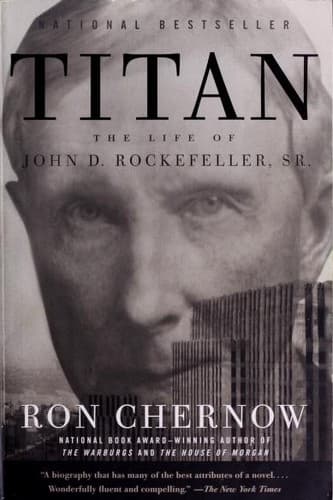
Titan: The Life of John D. Rockefeller, Sr.
Zach’s Finest
Rockefeller built at a scale no one had attempted, and tithed at one to match. His lasting legacy is treating a fortune as an obligation rather than a possession. A century later, the modern foundation still runs on his blueprint.
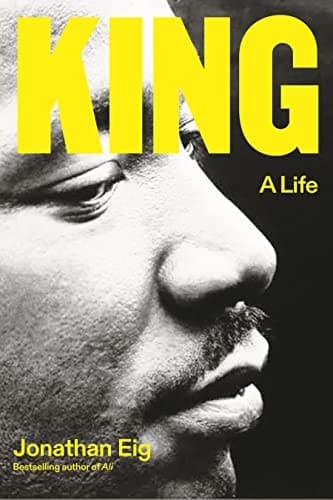
Prophets perform miracles. Behind the myth is a man fully conscious of his mortality and of what the fight for equality would take from him. Eig restores that man: more radical, more exhausted, and more alone than the holiday allows.
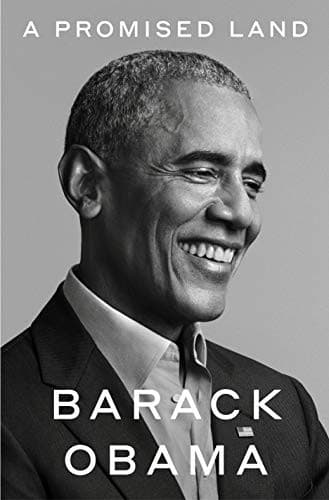
Politics is the art of compromise, and A Promised Land gives a glimpse of Obama’s political genius: delivering on transformational change without losing your values.
Zero to One: Notes on Startups, or How to Build the Future
Zach’s Finest
Everyone knows how to compete. Thiel's case is that competing is itself the failure mode — the returns are in building what no one else can, and then holding that ground alone.
The Courage to Act: A Memoir of a Crisis and Its Aftermath
Zach’s Finest
Crises outrun theory's instruments, not its insights. They demand creativity, judgment and coordination. A testament to Bernanke as the right man at the right time.
Narrative Economics: How Stories Go Viral and Drive Major Economic Events
Zach’s Finest
Theory treats stories as noise. Shiller models them as epidemics, with contagion and recovery rates, because the story is what moves the economy rather than what obscures the model.
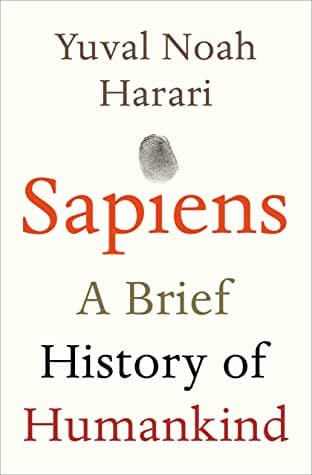
Sapiens: A Brief History of Humankind – The #1 New York Times Bestseller Exploring How We Became Ruler of the Planet
Zach’s Finest
Our capacity for shared fiction is the operating system of human cooperation — money, nations and corporations exist only because enough of us believe in them.
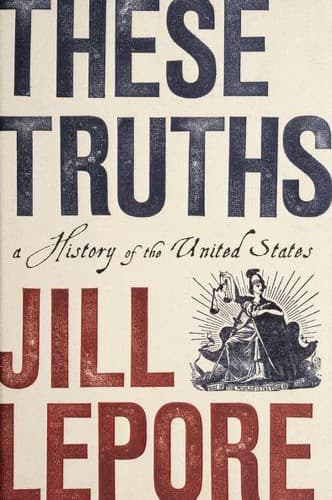
Lepore tells American history as a messy, unfinished project of living up to its creed that all men are created equal. Black Americans, Native Americans and women appear as people pushing that promise forward, not as footnotes to it.
Medical Apartheid: The Dark History of Medical Experimentation on Black Americans from Colonial Times to the Present
Zach’s Finest
Black distrust of the medical establishment is rooted in an ongoing history of abuse of Black bodies and personhood — tragic, systematic, and far more recent than most people assume.
What makes someone irreplaceable isn't inside them. Ishiguro puts it in the people who love them — which is also how an Artificial Friend becomes a someone.
Laferrière writes in jazz — witty, improvisational, blue — to make a comedy out of the way racism structures desire and expectations, sometimes to mutual climax.
These are García Márquez's exiles — Latin Americans adrift in a Europe that never quite makes sense to them, where the strangeness comes from dislocation rather than magic. How do we kindle belief in who we are, when we are so far from home?
Ogawa gives every number a character — amicable, perfect, prime. Mathematics is beautiful because its patterns outlast the mind that holds them, just as people are defined more by the feelings they evoke than by any specific memory of them.
The Lord Of The Rings: A Fully Illustrated Version of the Classic Fantasy Novels
Zach’s Finest
Middle-earth reads as fantasy and works as political theory. The Ring tempts nobody with greed — it tempts them with the power to put things right, which is why Gandalf and Galadriel fear it most.
On the Genealogy of Morals (A Modernized Translation with a New Introduction and Biography)
Zach’s Finest
Our good and evil were invented by the weak as imaginary revenge on the strong, and the victory turned man against himself. Nietzsche is the first to ask whether it was worth it.
Nozick's is the libertarian answer to Rawls: rights are limits on what may be done to people, not goals to be maximised, so no constraint on freedom is justified by the good it would buy. The minimal state is the framework for utopia.
Emotions have always shaped the law; Nussbaum's contribution is to sort them. Disgust is disqualified because it projects our own animality onto whole groups, and shame because it punishes what a person is rather than what they did. Indignation survives, since it tracks real harm.
Rawls is the most consequential twentieth-century political philosopher. He proposes a framework for justice that is impartial (what would you agree to before you knew who you'd be?), principled (a set of equal basic liberties no majority can vote away), and avoids the utilitarian calculus that permits one person to be sacrificed for a larger total.
Liberal thought codifies the limits of individual freedom as whatever is needed to respect the freedom of others. Scruton argues that people are more than that: answerable to each other, bound by obligations they never agreed to, and able to hold some things sacred rather than tradable.
Shambhala: The Sacred Path of the Warrior (Shambhala Classics)
Zach’s Finest
Trungpa strips out the religion and keeps the practice. The foundation is basic goodness — we are sound, not fallen — and the warrior's courage is the willingness to stay undefended.
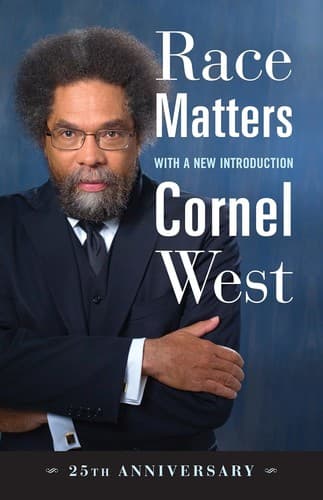
Liberal structuralism attributes racism to systemic forces, excusing individual responsibility. Conservative behaviorism treats moral failings as the root cause of Black challenges, ignoring institutional barriers. Prof West names what neither can see: a nihilism of meaninglessness and lovelessness, answered not by better analysis but by love.
A letter to his fifteen-year-old son, refusing every abstraction: racism is what is done to bodies. Coates offers no hope — not religious comfort, not the arc of justice, nothing. The Dreamers must wake themselves, and he does not believe anyone can do it for them.
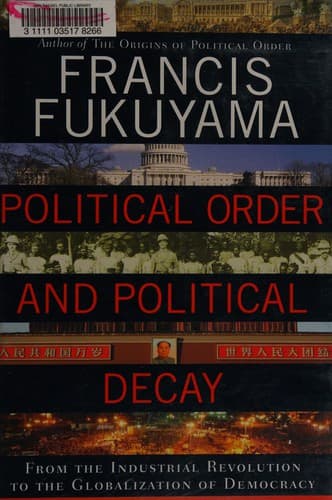
Political Order and Political Decay: From the Industrial Revolution to the Globalization of Democracy
Zach’s Finest
The state, the rule of law, and democratic accountability are what political order rests on. Fukuyama shows how the order in which they arrive decides whether a system works or decays.
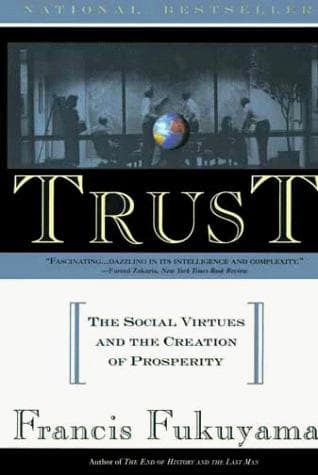
Trust: The Social Virtues and the Creation of Prosperity
Zach’s Finest
Trust is the social capital that lets strangers cooperate without a contract. Low-trust societies stay familistic, and their enterprises never reach the scale that professional management allows.
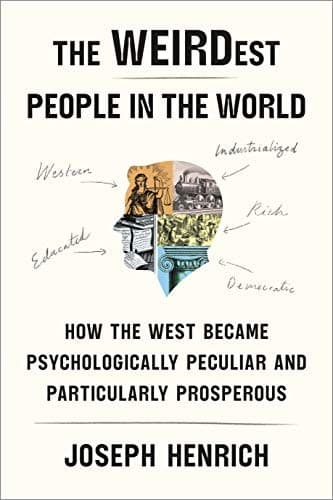
The WEIRDest People in the World: How the West Became Psychologically Peculiar and Particularly Prosperous
Zach’s Finest
The medieval Church's ban on cousin marriage dissolved the kin networks most societies run on. That reshaped individual psychology, which in turn shaped how Western societies function and what they value.
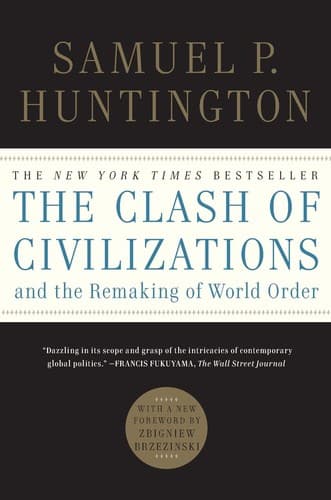
The Clash of Civilizations and the Remaking of World Order
Zach’s Finest
Huntington argues that the world divides into civilizations defined by culture and religion, and that these — not ideology or economics — set the lines along which states ally and fight. The thesis forced religion onto a post-Cold War agenda that had no room for it.
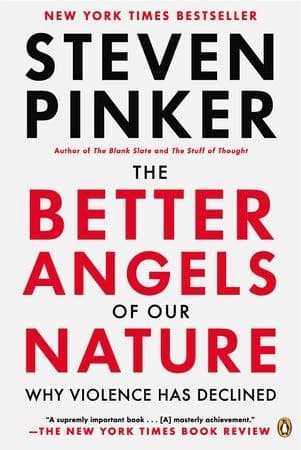
The Better Angels of Our Nature: Why Violence Has Declined
Zach’s Finest
Pinker argues that violence has declined across every scale, and not because people improved. Human nature held constant; what changed were the conditions — a state monopoly on force, commerce, literacy, an expanding circle of who counts as a person — that let the better angels win more often.
Dataclysm: Love, Sex, Race, and Identity--What Our Online Lives Tell Us about Our Offline Selves
Zach’s Finest
By analyzing OkCupid's data, its cofounder reveals societal attitudes that people won't state. Which may be why these markets are so inefficient: everyone is trading on preferences nobody admits to having.
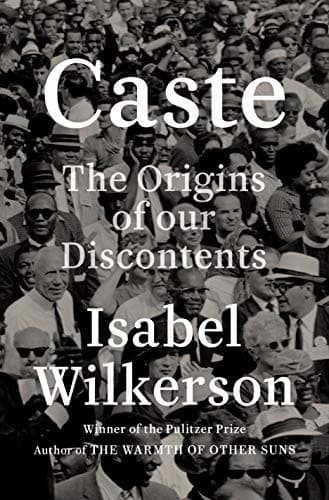
Caste (Oprah's Book Club): The Origins of Our Discontents
Zach’s Finest
Wilkerson argues that American racism is a caste system, not a set of attitudes: rank is inherited, marriage policed, labor assigned, and terror keeps the line — all of it resting on the assumption that some people are born above others.
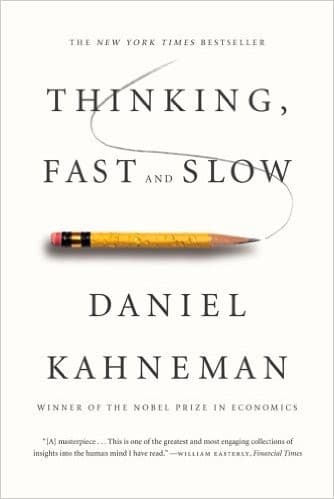
Two processors: one cheap and fast, one slow and expensive. The fast one is usually right, and wrong in predictable ways. Kahneman's work can help you learn when to pay the cost of finer inference.
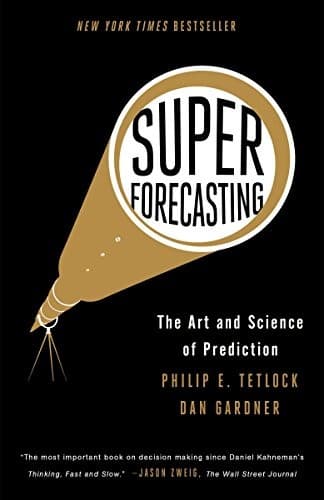
Superforecasting: The Art and Science of Prediction
Zach’s Finest
Experts don't beat simple extrapolation, and the famous ones do worse. Crowds beat experts; superforecasters beat crowds. Superforecasting is measurable, persistent, and learnable.
When Everyone Knows That Everyone Knows . . .: Common Knowledge and the Mysteries of Money, Power, and Everyday Life
Zach’s Finest
Common knowledge — not just everyone knowing, but everyone knowing that everyone knows — is what makes coordination possible. Money runs on it, innuendo exists to avoid it, and regimes fall the moment a crowd sees itself.
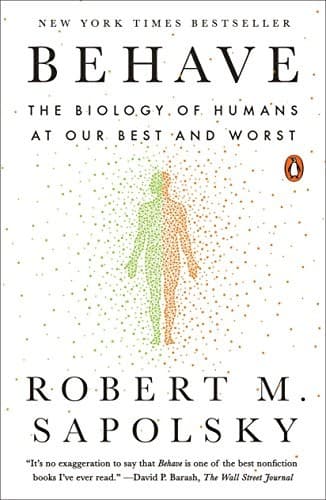
Behave: The Biology of Humans at Our Best and Worst
Zach’s Finest
Behavior is conditioned by biology, which is itself conditioned by societal forces — and no level is more fundamental than another. Sapolsky's conclusion is that free will doesn't survive the analysis.
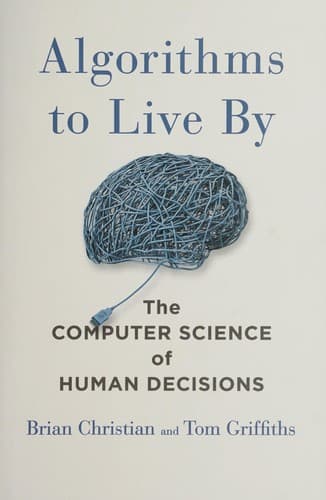
Algorithms to Live By: The Computer Science of Human Decisions
Zach’s Finest
Algorithms are how computer science handles scarce resources, and the scarcest one in a human life turns out to be deliberation itself. Which is why the book's best advice — the 37% rule, the case for simpler rules over more data — is mostly to stop optimizing and commit.
Immune: A Journey into the Mysterious System That Keeps You Alive
Zach’s Finest
The immune system isn't a machine but an ecosystem — the second most complex thing in the body after the brain. Dettmer names its protagonists and their playbook: a fast, indiscriminate first line buying time for a second that learns exactly what you're fighting. ** **
Gould forcefully demonstrates that the enterprise of measuring human intelligence has repeatedly been shaped by the need to legitimize social hierarchies. When one claim is debunked, a new approach arrives serving the same end.
Any formal system whose axioms can be listed, and which is strong enough to describe arithmetic, cannot be both consistent and complete. Gödel's theorem ended Hilbert's dream of a complete and provably consistent foundation for mathematics — and did it by turning self-reference, until then a source of paradox, into rigorous proof. Hofstadter's contribution is to show that the same loop runs through Bach's canons and Escher's staircases: reason folding back on itself is not a defect of mathematics but a feature of any system rich enough to talk about itself.
The God Equation: The Quest for a Theory of Everything
Zach’s Finest
Newton, Maxwell and Einstein made monumental contributions to our understanding of the physical world, yet each holds only within its domain. Efforts to generalize produce contradictions — quantum theory and general relativity cannot both be right where they meet. The effort to unify them is progressing, but complicated.
The Naked Ape: A Zoologist's Study of the Human Animal
Zach’s Finest
Morris describes humans the way a zoologist describes any other species, granting no exemptions. The result is funny and thought-provoking at once — our hairlessness, our pair-bonding and the rituals of a crowded city all read as primate behavior in costume.
Bits are the elemental unit of information, atoms of matter, genes of heredity. The gene never delivered the simple code of life it promised, but it opened a new continent. Mukherjee's conceptual history is enlightening.
Why We Sleep: Unlocking the Power of Sleep and Dreams
Zach’s Finest
Clearing metabolic waste and consolidating memory are but a few reasons why we sleep. Walker methodically explains how sleep does its work across the animal kingdom and through every stage of life.
How to Change Your Mind: What the New Science of Psychedelics Teaches Us About Consciousness, Dying, Addiction, Depression, and Transcendence
Zach’s Finest
The evidence that a temporary dissolution of the ego produces durable relief from anxiety, addiction and depression is compelling. Pollan traces how the therapy was buried for a generation and then rediscovered.
The Code Breaker: Jennifer Doudna, Gene Editing, and the Future of the Human Race
Zach’s Finest
A brilliant biography of Jennifer Doudna, who with Emmanuelle Charpentier made CRISPR-Cas9 programmable and shared a Nobel in Chemistry for it. The tool lets us write and edit the genetic code. Without it there would be no Casgevy — the sickle cell therapy that became the first approved CRISPR medicine.
I Contain Multitudes: The Microbes Within Us and a Grander View of Life
Zach’s Finest
Our microbiome carries more than a hundred times as many genes as our own genome, and it profoundly influences our health: from cancer to digestion to mental health.
Ikigai: The Japanese Secret to a Long and Happy Life
Zach’s Finest
Ikigai is a reason to get up, and it needn't be grand or paid. In Ōgimi it looks like a garden, a lifelong circle of friends, and no intention of retiring.
The Courage to Be Disliked: How to Free Yourself, Change Your Life, and Achieve Real Happiness
Zach’s Finest
Freedom has a price, and the price is being disliked by someone. Adler's route there is the separation of tasks: your conduct is yours, other people's verdict on it is theirs.